
People of Sherwood

Helen Cresswell
Helen Cresswell, (1934-2005), was born in Nottingham and was an English television scriptwriter and author of more than 100 children's books. She was perhaps best known for comedy and supernatural fiction; such as the hugely popular Lizzie Dripping series. Many of her books were set in and around Nottinghamshire such as The Secret World of Polly Flint. It has also been suggested that elements of the manor house featured in Moondial was based upon Rufford Abbey.
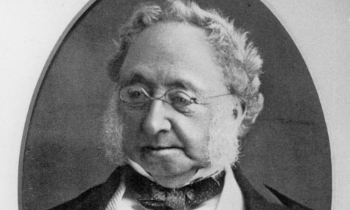
Thomas Hawksley
Thomas Hawksley, (1807 – 1893), was an English civil engineer of the 19th century, particularly associated with early water supply and coal gas engineering projects. He advised on the construction of Papplewick Pumping station. In 1844 he gave evidence to a government enquiry into public health, where he argued that there was a link between living conditions, water supply and water-borne diseases such as cholera and typhoid. He designed a network of pumping stations with steam engines, to bring the water to the surface from deep wells in the porous Sherwood sandstone. The water was stored in reservoirs on the higher ground, before being supplied to homes and businesses through a network of pipes.
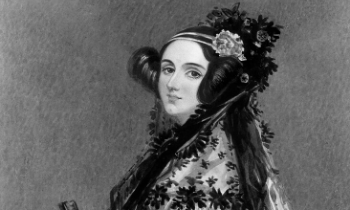
Ada Lovelace
Ada Lovelace,(1815-1852), was a mathematician credited with writing the first computer algorithm. She was the only legitimate daughter of Lord Byron. Ada was encouraged by her mother from a young age to pursue her interest in mathematics as she believed that by encouraging Ada’s interest in mathematics it would avoid Ada following in the footsteps of her father. Ada worked with Charles Babbage on the Analytical Engine, an early mechanical computer. The programming language Ada is named in her honour as well as a day in October dedicated to celebrating her achievements. Ada is buried in the Byron family tomb at St Mary Magdalene Church in Hucknall.
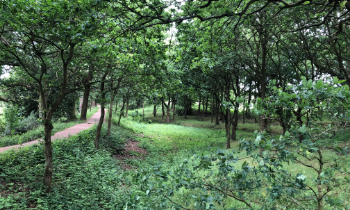
George Robinson
George Robinson was one of the founders of cotton mills near to Moor Pond Woods. In order to make the mill turn he helped to create a system of reservoirs and channels (called leats.), to help move water across the site for the extensive cotton processing activities along the Leen valley. The remains of the leats can be found across the Moor Pond Woods site, and are still fascinating visitors to the woods today.
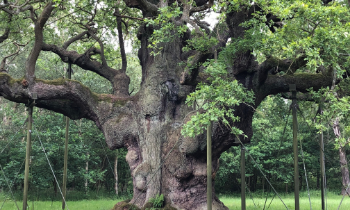
Major Hayman Rooke
Major Hayman Rooke, (1723-1806), lived in Mansfield Woodhouse after retiring from the army. He was an antiquarian and archaeologist particularly associated with roman finds. During his residence in the area he became known as ‘The Major’. The Major enjoyed long walks especially through the woods. It is believed that he often rested under the branches of a tree then known as the “Queen’s Oak” where he would perhaps have his lunch or write his notes. As time went on the locals began to call this tree “The Major’s Oak” and has since become known as “The Major Oak”.
Gertrude Savile
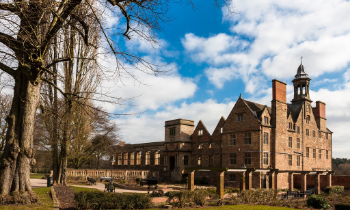
Gertrude Savile, (1697-1758), was a gentlewoman who spent most of her adult life at Rufford Abbey. Her father died when she was 3, leaving her brother George to inherit the title and estates. She resented both her brother and her mother, on whom she became financially and socially dependent. She left behind over 30-years’ worth of diaries that reflect both on national events and the fraught relationship with her mother. Her diary is a fascinating example of writing by an individual who didn’t fit the expected standards of a gentlewoman of her status.
The Friends of Nottingham Archive gained funding from our Community Grants scheme to catalogue and research archive documents about the Saville family, deciding the best way to share this was by publishing a book. Read about the official launch in their group newsletter here.
Joseph Whitaker
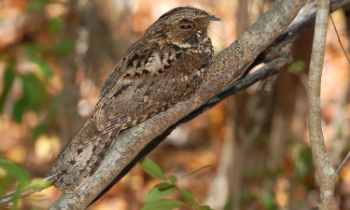
Joseph Whitaker, (1850 – 1932), was an English naturalist who lived for most of his life at Rainworth. He was a keen sportsman, botanist, fisherman and collected curios. He wrote several books, and some of his collection passed to the Mansfield Museum. One of his curios was an Egyptian nightjar, at the time the first known sighting of one in Britain, and only the second in Europe. It had been shot by a gamekeeper called Albert Spinks on 23 June 1883. Whitaker retrieved the bird and had it stuffed. He erected a Bird Stone to commemorate the event in Thieves Wood, to the west of Rainworth. The Bird Stone can still be seen in Thieves Wood today. Nightjars are one of the species that were monitored as part of the Saving Sherwood’s Special Species project.